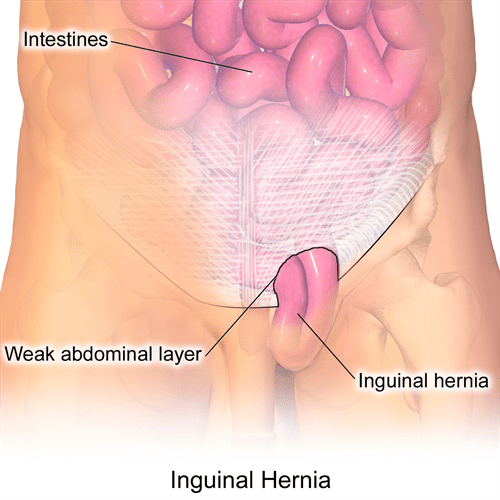
 There are two types of inguinal hernias:
- Indirect Inguinal Hernia: This type of hernia is more common and it is mostly an inherited hernia or a congenital hernia, that is, hernia that occurs at birth. This happens when the inguinal canal does not close during fetal development leading to a weak spot that allows the intestines to protrude through.
- Direct Inguinal Hernia: This type occurs with time especially when one is older or if the abs were overworked. Inguinal hernia happens when there is a soft spot in that wall of the abdomen that has an area called the inguinal canal.
- Congenital Weakness: Sometimes, people are born with weak muscles in their abdomen meaning that they are more susceptible to hernias than others. This is particularly so in cases if an indirect inguinal hernia is being experienced.
- Excessive Strain: Injuries that damage the abdominal muscles cause the formation of hernias and common activities include lifting heavy objects, hard physical work or straining during defecation or while urinating.
- Chronic Coughing or Sneezing: Smoking or sneezing due to an allergy, for example, creates pressure in the abdominal area – a hernia, in other words.
- Obesity: Obesity also puts force on the abdominal muscles hence causing pressure that may lead to hernia formation.
- Aging: However, as people grow older they develop somehow weak and less elastic muscles which increases their vulnerability to hernias.
- Pregnancy: Working muscle of the abdomen during pregnancy is tremendously stretched by the increasing size of the uterus, hence pregnant women are at a high risk of developing hernias.
- Pain or Discomfort: Patients with an inguinal hernia complain of pain and discomfort in the lower abdomen which intensifies when the patient is seated, lifting an object, coughs or forges. The pain may be mild or severe depending on the size of the hernia that has developed in the abdomen.
- Heaviness or Weakness in the Groin Area: Pain in the abdomen or groin is a straight indicator and is generally described as a heaviness, weakness or pressure. People may also have some pulling sensation around the bulge.
- Swelling or Tenderness: When judged that the hernia protrudes into the scrotum, males could experience either inflammation of this part or discomfort when touched.
- No Visible Bulge: In some cases, there may not be a lump seen at the beginning, but a person feels pain or a sensation of tightening in the groin area.
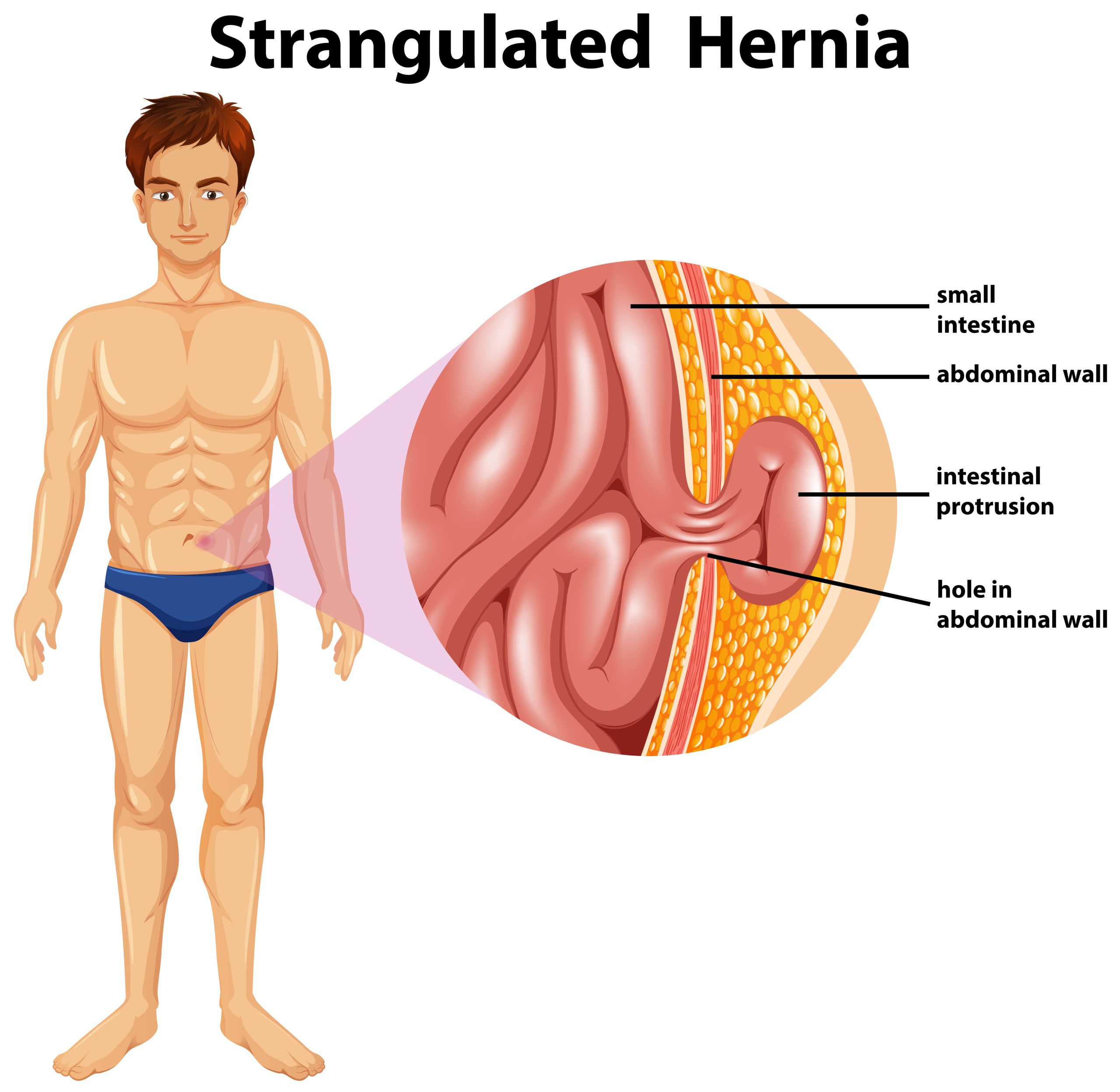
- Incarcerated Hernia: In some cases the tissue can herniate into the abdominal wall and even if it is forced back it cannot remain in place. This condition if referred to as incarceration may result in severe pain and may in fact cause compromise of blood flow to the intestines hence requires emergency intervention.
- Strangulated Hernia: In the case where the incarcerated hernia results in occlusion of blood supply to the intestines or any other tissue, then it is referred to as strangulated hernia. This is a dangerous condition that has to be operated on in order not to transform into a condition that leads to the formation of gangrene and other complications that are fatal.
 Diagnosis of Inguinal Hernia
An inguinal hernia is usually diagnosed during the physical assessment of a patient by a physician. The doctor will look for a hernia which is felt as a bulge at the groin region and when the patient coughs or strains the bulge may become apparent. At times the diagnosis of the hernia and the size and degree of advancement is made probable with imaging studies like sonogram or a CT scan.
Available Management Strategies in Inguinal Hernia
This is usually in accordance with the size of the hernia coin, the stage of the protruding tissue and the health status of the affected individual. Some of them are non-invasive while others require surgery to be performed.
Diagnosis of Inguinal Hernia
An inguinal hernia is usually diagnosed during the physical assessment of a patient by a physician. The doctor will look for a hernia which is felt as a bulge at the groin region and when the patient coughs or strains the bulge may become apparent. At times the diagnosis of the hernia and the size and degree of advancement is made probable with imaging studies like sonogram or a CT scan.
Available Management Strategies in Inguinal Hernia
This is usually in accordance with the size of the hernia coin, the stage of the protruding tissue and the health status of the affected individual. Some of them are non-invasive while others require surgery to be performed.
- Watchful Waiting
- Surgical Repair
- Open Hernia Repair (Herniorrhaphy): While performing this procedure, the surgeon makes an incision in the region of the groin, pulls the bulging tissue back into the abdomen, and does suturing of the gap in the abdominal muscles for reinforcement purpose using sutures or the synthetic mesh.
- Laparoscopic Hernia Repair: This is an endoscopic process that is carried out with the aid of small incisions at the abdomen and with the help of a laparoscope which is a thin tube with an attached camera and other instruments for surgery. The bulging tissue is then re-orientated and the defect in the abdominal wall is then sutured or reinforced using mesh. Laparoscopic surgery has proven to be faster in surgeries recovery time and the pain that comes with the surgery is minimal in comparison to the open repair.
Ready to consult a specialist?
Free first consultation at SurgiKure. Same-day appointments available.