What is laparoscopy treatment?
Laparoscopy treatment is one of the least invasive surgeries where a small surgical instrument known as a laparoscope is put into the belly through small cuts. This enables the surgeon to observe the internal parts of the body without having to open up giant incisions, making it safer and more efficient than normal open surgery. The camera relays pictures to a screen; thus, the surgeon can do intricate operations and has the least invasive effects on the body. Surgikure offers laparoscopy treatment for many diseases, such as hernia, gall neurons, and appendicitis, among others.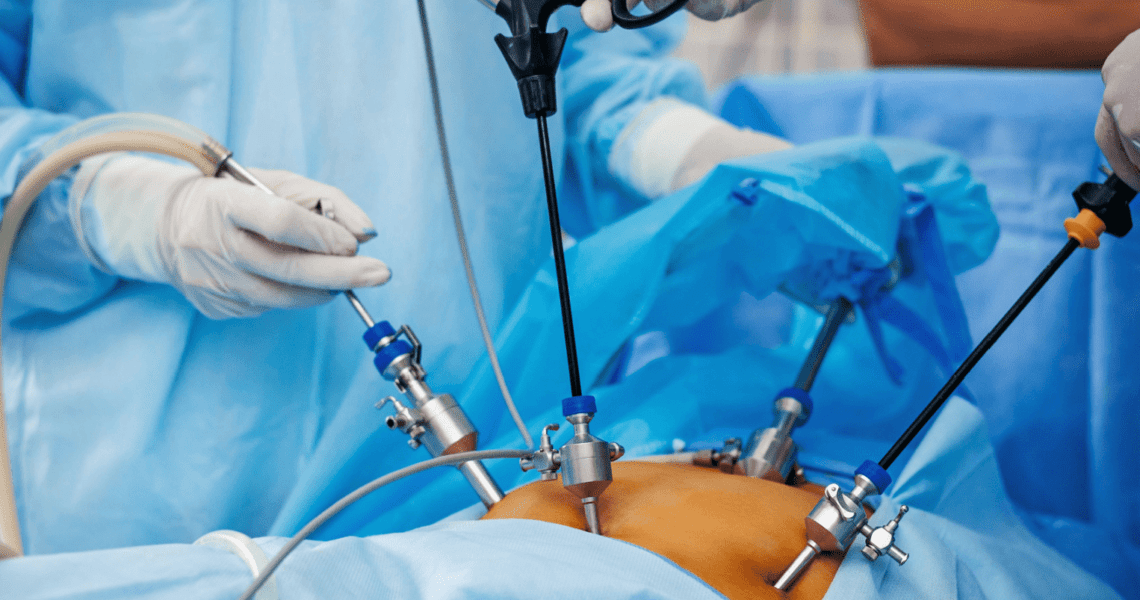
Credits : www.nufertility.com
Conditions treated with Laparoscopy Treatment- Inguinal hernia: A situation where a part of the intestine herniates through the aponeurosis of the abdominal wall and occurs with mild pain and discomforts. Laparoscopy treatment is much faster than open hernia surgery and recovery time is also not long.
- Umbilical Hernia: This is a situation where one or more loops of the intestine herniate through the abdominal wall at the umbilical region and is at times seen in adults but more common in children. For this condition, laparoscopy treatment can be used to cure the condition while at the same time leaving a little scar and helping the patient to recover fast.
- Epigastric Hernia: Typically taking place in the region of the lower surface of the sternum, an epigastric hernia is likely to produce pain and distress. Laparoscopy treatment enables repair with minimum scarring because it involves incisions that are less likely to be large.
- Hiatus Hernia: If the stomach protrudes through the diaphragm and brings acid reflux and discomfort, the laparoscopy treatment will allow one to shift the stomach.
- Gallbladder Stones: It was found that gallstones may lead to sharp pain in the abdomen, sickness, and vomiting. Surgikure offers laparoscopy treatment to take out gallbladder; the option offers patients quick relief and a very short healing period.
- Appendicitis: Appendicitis involves the swelling of the appendix and may demand surgery on an emergency basis. Laparoscopy treatment makes it possible to perform surgery fast and with minimal destruction to the body; hence, patients can move around as quickly as possible.
- Tubectomy: A procedure for women in which the fallopian tubes are blocked or cut; tubectomy is a sterilization method. Laparoscopy treatment is less invasive than traditional open surgery, making it a preferred procedure for this type of treatment with a short recovery time and little scarring.
- Hysterectomy: This might be done in cases such as fibroids, endometriosis, or cancer, among others. Uterus might be removed for conditions such as fibroids, endometriosis, or cancer, among others. Laparoscopy Treatment enables treatment of such major surgery without much pain and the recovery time is relatively much shorter.
- Abdominal pain or discomfort: Constant pain in the stomach might point to a hernia, appendicitis, or gallstones.
- Swelling or a noticeable bulge: In particular, hernias are evident for which there is a lump in the abdominal area. For example, in the groin area.
- Severe indigestion or acid reflux: Hiatial hernia can result in gastroesophageal reflux. Surgery is sometimes necessary.
- Nausea and vomiting: These are normally signs of gallstones or appendicitis and can be fixed through the use of laparoscopic surgery.
- Minimal Scarring: This is important because small incisions lead to small, identifiable scars.
- Faster Recovery: If there are complications such as deep infection or significant soft tissue injuries, there may be significant cost implications to the patient, together with a delayed return to normal activities for at least a week.
- Less Pain: It is therefore important to point out that laparoscopy treatment administered on a patient causes a lot less post-treatment discomfort relative to open surgery.
- Reduced Risk of Infection: These shorter incisions in turn mean that there is a minimal chance of a patient developing an infection after surgery.
- Shorter Hospital Stays: The majority of patients are discharged within 24-48 hours to enable them to undergo home based recoveries.
Ready to consult a specialist?
Free first consultation at SurgiKure. Same-day appointments available.