Piles Meaning: What Are Hemorrhoids, Causes, Types & When to See a Doctor
You’re sitting in the bathroom, and something doesn’t feel right. There’s discomfort, maybe some bleeding, and you’re wondering: “What’s happening to me?” If you’ve searched for “piles meaning” or “what are piles,” you’re not alone. Millions of people experience this common condition every year, yet many feel embarrassed to talk about it. The good news? Understanding what piles are is the first step toward getting effective treatment and reclaiming your comfort.
Let’s break down everything you need to know about this condition in a straightforward, judgment-free way.
Understanding Piles Meaning: A Clear Definition
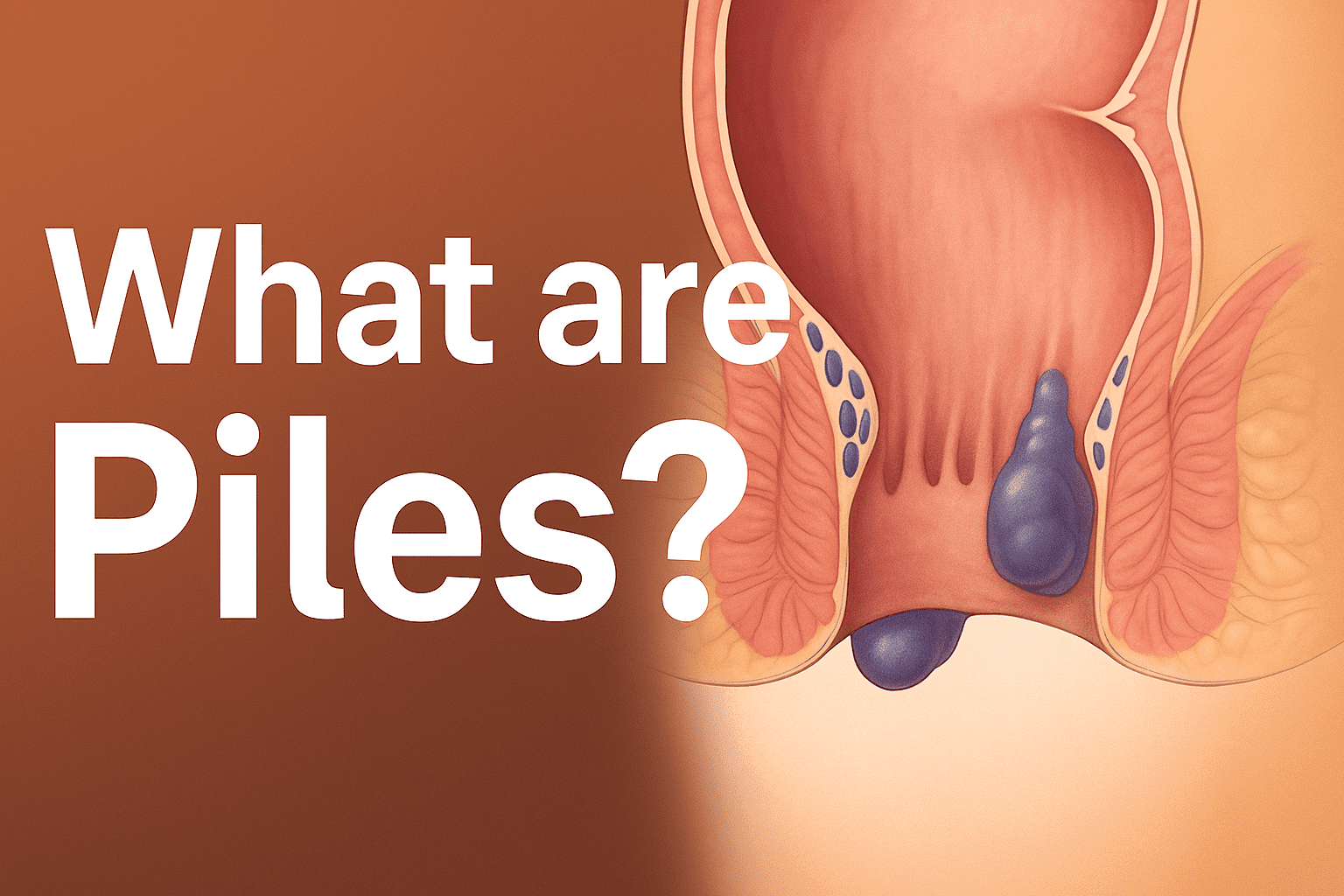
Piles meaning is quite simple: piles are swollen veins in and around the anal area. The medical term is hemorrhoids, which comes from the Greek words “haima” (blood) and “rhegnynai” (to burst or rupture). These are essentially enlarged blood vessels that develop in the lower rectum and anus.
Think of your veins like a network of roads carrying blood. Sometimes, due to increased pressure or strain, these veins in the anal region become congested and inflamed. When this happens, they swell and can cause discomfort, itching, bleeding, or pain.
The confusion often arises because people use “piles” and “hemorrhoids” interchangeably—and that’s perfectly fine. Both terms refer to the same condition. In some regions, piles is the more common colloquial term, while hemorrhoids is the medical terminology.
How Piles Look Like: Visual Understanding
If you’re wondering how piles look like, the appearance varies significantly depending on whether they’re internal or external (we’ll explain these types shortly).
External piles are visible to the naked eye. They appear as:
- Small, grape-like lumps around the anus
- Purple or bluish discoloration due to the trapped blood
- Swollen tissue that you can feel or see when examining the area
- In some cases, a dark or black appearance if they’ve bled internally
Internal piles are located higher up in the rectum and aren’t typically visible unless they prolapse (protrude outside). When they do, they may appear as:
- Soft, moist tissue protruding from the anus
- Pink or red coloration
- Tissue that may bleed when irritated
Clinical images matter. During a consultation at SurgiKure Hyderabad, our experienced doctors can show you real clinical images to help you better understand your specific condition. Visual confirmation is crucial for accurate diagnosis and treatment planning.

What Are Piles? Understanding the Types
To fully grasp what are piles, it’s essential to understand the two main categories:
Internal Hemorrhoids
Internal piles develop inside the rectum, above the dentate line (a specific anatomical boundary). Because this area has fewer pain-sensing nerves, internal piles often don’t cause pain—even though they may bleed.
Characteristics include:
- Usually painless unless they prolapse
- Bright red bleeding during bowel movements
- Feeling of incomplete bowel evacuation
- Mucus discharge causing itching
- May protrude during straining
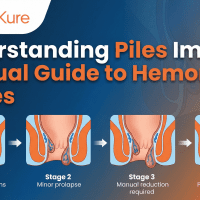
Severity grades:
- Grade 1: Small hemorrhoids visible only on colonoscopy
- Grade 2: Larger hemorrhoids that protrude during bowel movements but retract spontaneously
- Grade 3: Hemorrhoids that protrude and require manual reduction
- Grade 4: Permanently prolapsed hemorrhoids that can’t be pushed back in
External Hemorrhoids
External piles form under the skin around the anus and are often more uncomfortable because the area is rich in pain-sensing nerves.
Characteristics include:
- Visible lumps around the anal opening
- Itching and irritation
- Pain, especially during bowel movements or when sitting
- Possible bleeding
- Discomfort that may intensify with activity
Thrombosed external hemorrhoid: When blood clots inside an external hemorrhoid, it becomes a thrombosed hemorrhoid—extremely painful but not dangerous. This typically requires medical attention.
Piles Definition in Medical Context
From a medical standpoint, the piles definition recognizes them as a vascular condition where the hemorrhoidal plexus (network of veins) becomes pathologically enlarged. This is a deviation from the normal state, though the veins themselves are a natural anatomical feature everyone has.
What makes them “piles” is the symptomatic enlargement and dysfunction—not their mere existence.
What Causes Piles? Key Risk Factors
Understanding the causes helps with both prevention and treatment:
Pressure and straining:
- Chronic constipation forcing excessive straining
- Diarrhea and frequent bowel movements
- Spending prolonged time on the toilet
Lifestyle factors:
- Low-fiber diet
- Inadequate water intake
- Sedentary lifestyle
- Heavy lifting or strenuous exercise
Pregnancy and childbirth:
- Hormonal changes increase blood vessel pressure
- Physical strain during delivery
Age:
- More common as tissues weaken with age
- Peak incidence between 45-65 years
Genetics:
- Family history increases susceptibility
- Structural factors passed down
Other factors:
- Obesity
- Prolonged sitting
- Anal intercourse
- Portal hypertension (liver disease)

Symptoms: When You Should Pay Attention
Not all piles cause symptoms, but when they do, they might include:
- Itching or irritation in the anal area
- Pain or discomfort, especially during bowel movements
- Bright red bleeding (often visible on toilet paper or in stool)
- Swelling or lumps near the anus
- Mucus discharge
- A feeling that bowels haven’t completely emptied
- Discomfort when sitting
Important note: Bleeding isn’t always from piles. Always get bleeding evaluated by a doctor to rule out other conditions.
When to See a Doctor: Don’t Wait
You should consult a healthcare professional if you experience:
- Persistent bleeding from the anus
- Severe pain that doesn’t improve with home care
- Symptoms lasting more than a week
- Large amounts of blood loss
- Symptoms interfering with daily life
- Lumps or tissue protruding that you can’t manage
- Uncertainty about whether it’s piles or another condition
At SurgiKure Hyderabad, we specialize in piles and related colorectal conditions. Our expert surgeons can provide accurate diagnosis and discuss treatment options tailored to your situation—from conservative management to advanced laser treatment procedures.
Treatment Options Available
Modern treatment for piles ranges from conservative to surgical:
Non-surgical approaches:
- Dietary modifications and hydration
- Stool softeners and fiber supplements
- Topical creams and ointments
- Sitz baths (sitting in warm water)
- Lifestyle changes
Minimally invasive procedures:
- Rubber band ligation
- Sclerotherapy
- Infrared coagulation
Advanced surgical options:
- Laser treatment for piles — Our cutting-edge laser technology at SurgiKure provides faster healing, minimal scarring, and reduced postoperative pain
- Hemorrhoidectomy (surgical removal)
- Stapled hemorrhoidopexy
The best approach depends on the severity of your condition, your symptoms, and your preferences. During your consultation, our specialists will recommend the most suitable option.
Why Choose SurgiKure Hyderabad?
When seeking treatment for piles, experience matters. SurgiKure is a leading surgical clinic in Hyderabad specializing in:
- Piles (hemorrhoids)
- Anal fissures
- Anorectal fistulas
- Hernias
- Related colorectal conditions
Our advantages include:
- Board-certified colorectal surgeons
- State-of-the-art laser treatment technology
- Minimally invasive techniques
- Patient-centered care with confidentiality
- Quick recovery protocols
- Transparent pricing and consultation process
Key Takeaways
- Piles meaning: Swollen veins in the anal area; the term is synonymous with hemorrhoids
- Types: Internal (higher up, often painless) and external (visible, often painful)
- Causes: Straining, low-fiber diet, pregnancy, age, genetics, and lifestyle factors
- How piles look: External piles appear as grape-like lumps; internal piles may protrude
- When to see a doctor: Persistent symptoms, bleeding, severe pain, or uncertainty about diagnosis
- Treatment options: Range from conservative management to advanced laser treatment
- Real images matter: Seeing clinical images during consultation helps with understanding and diagnosis
Frequently Asked Questions
Are piles dangerous?
Most piles are not dangerous, but complications like severe bleeding or blood clots require medical attention.
Can piles go away on their own?
Mild cases may improve with dietary changes and lifestyle modifications, but persistent piles usually require professional treatment.
Is piles surgery painful?
Modern techniques, especially laser treatment, minimize postoperative pain significantly.
Can piles come back after treatment?
Recurrence is possible if underlying causes (like constipation) aren’t addressed, but proper treatment and lifestyle changes reduce this risk.
—
Get Professional Help Today
If you’re experiencing symptoms of piles or have questions about your condition, don’t suffer in silence. Understanding piles meaning is great, but professional diagnosis and treatment are essential for lasting relief.
Schedule your free consultation at SurgiKure Hyderabad today. Our expert surgeons will examine your condition, show you real clinical images for clarity, and discuss treatment options including our advanced laser treatment technology. We’re committed to providing confidential, compassionate care that gets you back to living comfortably.
Contact SurgiKure Hyderabad now — because your health and comfort deserve expert attention.
—